
The evolution of automotive safety has been one of the most significant advancements in modern transportation. Over the past century, vehicles have transformed from rudimentary machines with little concern for passenger safety into highly engineered marvels equipped with cutting-edge technologies designed to prevent accidents and protect lives. This journey—from the invention of seatbelts and airbags to the development of sophisticated autonomous emergency braking systems—represents a remarkable blend of engineering, innovation, and human-centered design.
In this article, we’ll explore the history, importance, and future of automotive safety innovations, focusing on two milestones: airbags and autonomous emergency braking (AEB).
Early Foundations of Automotive Safety
In the early 20th century, automobiles were built primarily for speed and mobility. Safety was often an afterthought. Roads were less regulated, driver training was minimal, and vehicle structures offered little protection in collisions. As car ownership expanded, so did the number of accidents and fatalities, highlighting the urgent need for safety innovations.
One of the first breakthroughs was the seatbelt, introduced in the 1950s and mandated in many regions by the 1970s. While seatbelts dramatically reduced injuries, engineers recognized that more was needed to protect passengers during severe crashes. This led to the development of airbags, one of the most revolutionary safety features of the modern era.
The Invention and Evolution of Airbags
Origins
The concept of airbags dates back to the 1950s when inventors began experimenting with inflatable cushions to protect occupants in collisions. However, it wasn’t until the 1970s and 1980s that airbags became commercially viable. Early systems were bulky and unreliable, but continuous innovation improved their effectiveness.
How Airbags Work
Airbags are designed to deploy within milliseconds of a collision. Sensors detect rapid deceleration, triggering an inflator that fills the bag with gas, cushioning the occupants from impact. Positioned in steering wheels, dashboards, side panels, and even seatbelts, airbags provide a crucial layer of protection when combined with seatbelts.
Impact on Road Safety
Studies show that airbags reduce driver fatalities in frontal crashes by nearly 30%. Side airbags, introduced later, have been particularly effective in reducing deaths from side-impact collisions, where protection is limited. Today, multiple airbag systems are standard in most vehicles, including curtain airbags that protect passengers’ heads during rollovers.
The Shift Toward Preventive Safety
While airbags and seatbelts focus on mitigating injury after a crash, modern safety philosophy emphasizes prevention—stopping accidents before they occur. This paradigm shift gave rise to active safety technologies, powered by sensors, cameras, radar, and artificial intelligence.
Among these, autonomous emergency braking (AEB) stands out as a life-saving innovation that represents the future of automotive safety.
Autonomous Emergency Braking (AEB): A Modern Revolution
What is AEB?
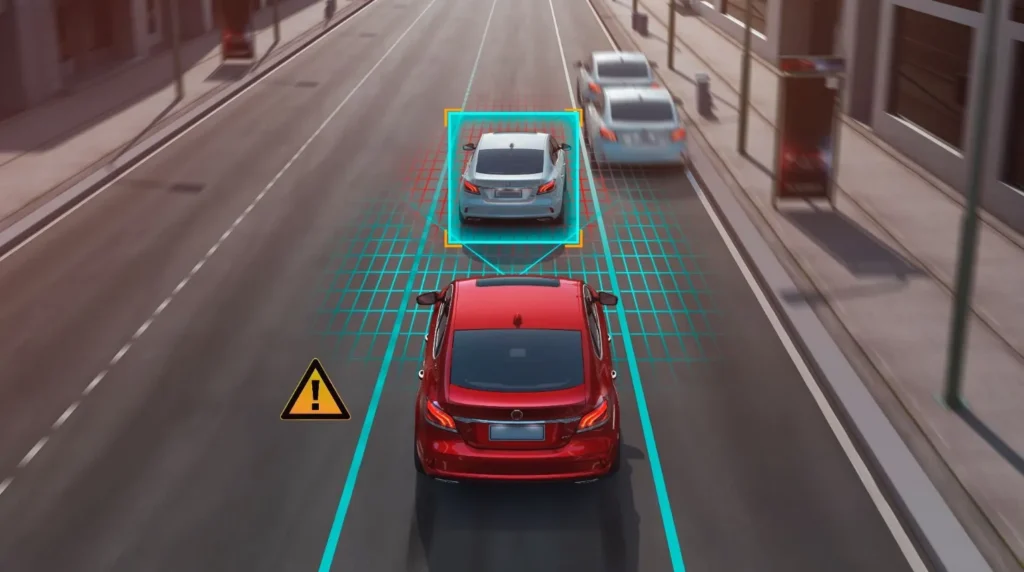
Autonomous Emergency Braking is an advanced driver-assistance system (ADAS) that automatically applies the brakes when it detects an imminent collision. Unlike airbags, which activate after an accident, AEB intervenes beforehand, reducing the severity of—or even preventing—the crash entirely.
How AEB Works
AEB systems use a combination of radar, lidar, cameras, and onboard computers to monitor the vehicle’s surroundings. When the system detects a potential collision with another vehicle, pedestrian, cyclist, or object, it warns the driver. If the driver fails to react in time, the system automatically applies the brakes.
There are three key categories of AEB:
- Low-speed AEB – Designed for city driving to prevent fender-benders.
- High-speed AEB – Assists in highway conditions where collisions can be more severe.
- Pedestrian/Cyclist AEB – Detects vulnerable road users and prevents accidents.
Benefits of AEB
Research has shown that AEB can reduce rear-end collisions by up to 50%. In addition, it significantly decreases insurance claims and repair costs by mitigating damage in unavoidable crashes. Importantly, AEB plays a vital role in protecting pedestrians and cyclists, who are among the most vulnerable road users.
From Passive to Active Safety: A Seamless Integration
The transition from airbags (a passive safety feature) to AEB (an active safety feature) reflects a broader trend in automotive engineering: combining protection with prevention. Together, these systems create a holistic safety net:
- Airbags + Seatbelts: Provide lifesaving restraint and cushioning in accidents.
- AEB + Other ADAS Features: Act to prevent collisions by assisting the driver with warnings, lane keeping, blind-spot monitoring, and adaptive cruise control.
This integration marks a shift from vehicles reacting to crashes to vehicles actively avoiding them.
Global Adoption and Regulations
Airbags
By the early 2000s, airbags became mandatory in many countries. Their inclusion is now considered non-negotiable in passenger vehicle design.
AEB
While initially available only in luxury models, AEB is rapidly becoming a standard feature worldwide. The European Union mandated AEB in all new vehicles starting in 2022, and similar regulations are being considered in the United States, Japan, and Australia. Automakers are increasingly committed to making AEB accessible across all price ranges, not just high-end vehicles.
Challenges in Safety Innovation
Despite their effectiveness, airbags and AEB face challenges:
- Cost and Accessibility – While AEB is becoming more affordable, some budget vehicles in developing countries still lack advanced safety systems.
- Reliability in Complex Environments – AEB systems can struggle with unusual weather conditions (fog, heavy rain, snow) or in crowded urban settings where false alarms may occur.
- User Trust and Education – Drivers must understand that AEB assists but does not replace attentive driving. Over-reliance can lead to complacency.
- Airbag Injuries – In rare cases, airbags have caused injuries, particularly to children or smaller passengers, highlighting the importance of proper seatbelt use and child restraints.
Future of Automotive Safety
The trajectory of automotive safety points toward fully autonomous driving, where human error—the leading cause of accidents—can be minimized. Current AEB systems are steppingstones to this vision, as they demonstrate how machines can make split-second decisions to protect lives.
Future innovations may include:
- Vehicle-to-Vehicle (V2V) Communication: Cars communicating with each other to avoid collisions.
- AI-Enhanced Predictive Systems: Algorithms capable of anticipating dangerous driver behavior.
- Fully Integrated Safety Ecosystems: Combining airbags, AEB, adaptive lighting, and predictive AI into one seamless system.
Conclusion
From the life-saving cushion of airbags to the proactive intervention of autonomous emergency braking, the history of automotive safety is a testament to human ingenuity and commitment to preserving life. Airbags revolutionized crash protection, while AEB is revolutionizing accident prevention. Together, these innovations represent the dual pillars of modern safety: protecting passengers when accidents happen and preventing those accidents in the first place.
As technology continues to advance, we are moving closer to a future where road travel is not only faster and more efficient but also safer than ever before. Automotive safety innovations are not just engineering achievements—they are powerful reminders that every life on the road matters.